The Brian P. Dickinson, M.D. Revsision Aesthetic Breast Surgery Blog is an online professional journal with reflections, comments, experiences, opinions, articles, and patient testimonials related to Revsision Aesthetic Breast Surgery.
Sunday, May 11, 2014
Capsular Contracture Surgery
Capsular contracture can occur in patients who have breast implants. While there can be many reasons to have capsular contracture, I find that the more common reasons tend to be 1) history of hematoma or undetectable hematoma, 2) history of previous infection or subclinical infection, 3) long duration of implant placement, 4) patient specific factors (i.e. prone to keloid, hypertrophic scar, capsular contracture, etc.).
In patients who have a history of recurrent capsular contracture, despite previous capsulectomy, I have added to my management plan the following: At the time of capsule surgery, the implant is removed and the implant pocket is cultured. Post-operatively, the patient is placed on Keflex if able to tolerate, or clindamycin if there is a cephalosporin allergy. If the culture result is a bacterium not sensitive to Keflex or Clindamycin, then an antibiotic is chosen to fit the appropriate bacteria.
www.drbriandickinson.com
Wednesday, April 9, 2014
Mastopexy
Mastopexy and breast reduction procedures are common. Patients often want to have their breasts lifted to give a more youthful appearance to the breast. The ptotic or "sagging" breast tends to have the nipple areola complex below the level of the inframammary fold. The breast lift procedure is designed to lift the nipple areola complex to a more youthful position above the inframammary fold. Often the breast can be reduced in size at the same time as a mastopexy procedure. This tends to alleviate any shoulder pain, grooving, and trapezius muscle hypertrophy.
www.drbriandickinson.com
Sunday, January 26, 2014
Capsular Contracture Surgery & Revision Breast Surgery
Capsular contracture surgery and revision breast surgery are some of the more common aesthetic procedures performed in our practice.
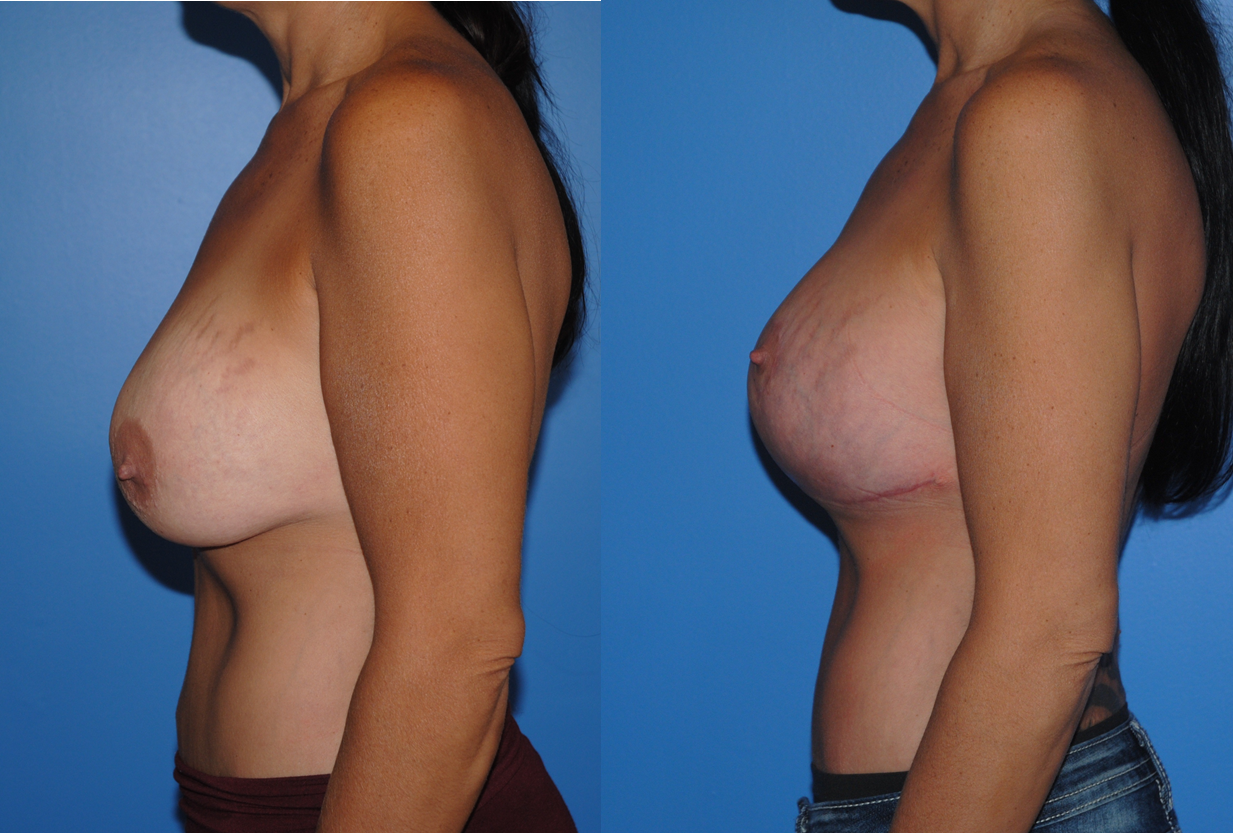
Capsular contracture is common in patients who have had mammary prosthesis in for over 10 to 15 years. Over time, as the breast capsule contracts, it tends to exert pressure on the underlying breast implant or mammary prosthesis. The mammary prosthesis then tends to reposition itself upwards, as there is less resistance "up" then against the fold inferiorly.
Capsular contracture surgery is performed under a general anesthetic and can take approximately 2 to 3 hours depending upon procedures performed to the breast.
Tuesday, December 17, 2013
Capsular Contracture Surgery
Capsular contracture surgery procedures are common when breast implants have been in for over 10-15 years. Removal of mammary prosthesis and capsules involves a surgical procedure requiring general anesthesia.
Following surgery, patients are required to wear a support bra, such as a jogging bra or other bra with significant support. This should be worn 24 hours a day seven days a week for 4 to 6 weeks. Patients often find an improvement in pain following the removal of their mammary prosthesis.
Wednesday, September 25, 2013
Superior Medial Pedicle Reduction Mastopexy
The superior medial pedicle reduction mastopexy allows for
consistent removal of breast tissue from the lateral region of the breast.
Often the breast tissue that is directed lateral to the anterior axillary line
can get in the way of performing different types of physical activity. The
superior medial pedicle allows the operating surgeon to maintain the superior
medial fullness to the breasts. It is helpful to limit the length of the inferior
limbs of the mastopexy pattern to maintain a lifted appearance to the breast.
www.drbriandickinson.comTuesday, July 9, 2013
Capsular Contracture Surgery
Capsular contracture surgery is common in patients who have had breast implants in for a long period of time. While implants can last several years without having the need for revision, when implants have been in for over 20 years or more, the lining that the body produces around the mammary prosthesis can begin to contract.
When the lining contracts, the surface area around the implant continues to decrease. As the surface area decreases, the volume around the implant remains fixed. This causes the implant and lining construct to become hard. As the lining contracts, the implant tends to move superiorly where there is less resistance. Correction of this involves removing both the implant and the lining around the implant and the placement of new implants.
www.drbriandickinson.com
Tuesday, January 15, 2013
Mastopexy Augmentation
Mastopexy augmentation and revision mastopexy augmentation are
some of the more common operations performed in our office. We frequently see
patients who have had implants placed several years ago and who have now lost
weight or who have had several children. The result is a breast shape that has
become ptotic as well as a loss of volume.
Correction of the
breast shape and volume often requires the placement of an implant as well as a
mastopexy procedure or breast lift procedure to improve the appearance and
position of the nipple areola complex. Patients are often very satisfied after
these procedures as their breasts appear more youthful.
www.drbriandickinson.com
Subscribe to:
Posts (Atom)